
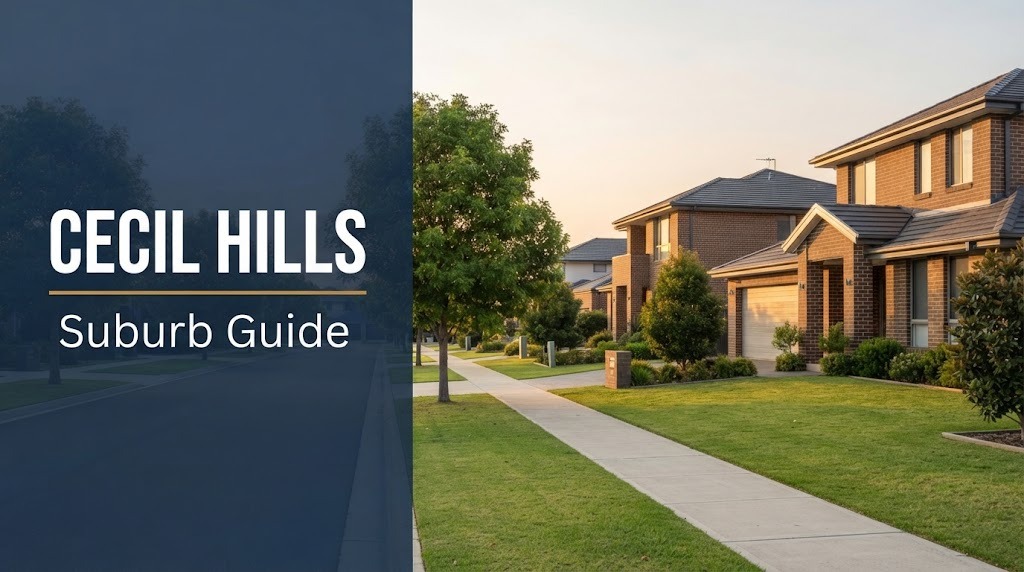
Living in Cecil Hills NSW means quiet, leafy streets, large family homes and a strong sense of community, all within easy reach of Liverpool and the M7. Cecil Hills is a residential suburb in the 2171 postcode, part of the City of Liverpool in South-West Sydney. It suits families and upgraders who want space without giving up convenience.
In this guide, local agent BJ Gregory walks you through the homes, schools, parks, shops, transport and property market. Whether you are planning a move or thinking about selling, you will get an honest picture of what the suburb offers.
Where Is Cecil Hills?
Cecil Hills sits around 38 kilometres west of the Sydney CBD, just south-west of the intersection of Cowpasture Road and Elizabeth Drive. The suburb was named in 1992 and was developed on part of the old Cecil Hills farm property, which helps explain its open, green feel.
Its neighbours include Bonnyrigg Heights, Edensor Park, Green Valley, Hinchinbrook and Elizabeth Hills. Elizabeth Hills was actually carved out of the southern part of Cecil Hills in 2009. Abbotsbury, Cecil Park and Middleton Grange are also close by.
Liverpool’s city centre is a short drive to the east, and the Westlink M7 is close at hand for trips across Sydney. The suburb falls under Liverpool City Council, which looks after local roads, parks, waste collection and planning.
For anyone weighing up living in Cecil Hills NSW, this location is a big part of the appeal. You get a quiet residential pocket with major roads only minutes away.
Homes and Housing in Cecil Hills
Cecil Hills is almost entirely a suburb of detached family homes. According to the 2021 Census data for Cecil Hills, about 94.8% of occupied dwellings were separate houses, and around 82.9% had four or more bedrooms.
Most homes were built after the suburb was established in the 1990s, and many sit on generous, established blocks with room for gardens and outdoor living. You will see a mix of single-storey brick homes and larger two-storey family homes.
The same Census showed high home ownership, with 35.7% of homes owned outright and 47.2% owned with a mortgage. That settled, owner-occupier base is one reason living in Cecil Hills NSW feels stable from year to year.
The suburb suits growing families, upgraders moving out of smaller homes, and multi-generational households who need extra bedrooms. It is less suited to buyers looking for apartments or small, low-maintenance units, as there are very few in the area.
Schools and Childcare Near Cecil Hills
Schools are a major drawcard for living in Cecil Hills NSW. The suburb has its own public primary and high school, so many children can walk or ride a short distance to class.
- Cecil Hills Public School: a government primary school (K–6) that opened in 2003.
- Cecil Hills High School: a government secondary school (Years 7–12) on Spencer Road, opened in 1996. It has recently been upgraded with new classrooms and an extended hall.
Nearby Catholic and independent options include Freeman Catholic College in Bonnyrigg, Good Samaritan Catholic College in Hinchinbrook, Thomas Hassall Anglican College in Middleton Grange, Minarah College and Irfan College. Bonnyrigg Heights, Green Valley and Hinchinbrook public schools are also close.
For younger children, there are childcare and early learning centres in and around the suburb. Always check catchment zones and enrolment rules directly with each school, as boundaries and policies can change.
Parks, Shops and Lifestyle
The heart of the suburb is Dunumbral Park, home to Doujon Lake, walking paths and two playgrounds. Gough Park adjoins it to the south, creating a green corridor that is popular for evening walks, jogging and weekend picnics.
Pye Hill Reserve, a newer reserve beside Cecil Hills Public School, adds a playground and walking paths. To the north, the Plough and Harrow area of Western Sydney Regional Park offers a café, playground and picnic areas.
For everyday shopping, Cecil Hills Shopping Village is anchored by Woolworths and includes a medical centre and a range of specialty shops. For bigger shopping trips, larger centres in Liverpool and surrounding suburbs are a short drive away.
Part of what makes living in Cecil Hills NSW enjoyable is the community feel. It is a multicultural suburb of established families, and the heritage-listed Cecil Hills Farm on Sandringham Drive is a reminder of the area’s rural past.
Getting Around: Transport and Roads
Cecil Hills is a car-friendly suburb. Cowpasture Road and Elizabeth Drive run along its edge, and the Westlink M7 links residents to the M5 and the wider Sydney motorway network.
There is no train station in the suburb itself. Instead, Transit Systems runs bus routes linking Cecil Hills to Liverpool and Cabramatta, where you can connect to Sydney Trains. Use the Transport NSW trip planner to check current routes and travel times.
If you commute to the city by public transport every day, factor in the bus connection when you think about living in Cecil Hills NSW. For drivers, and for anyone working in Liverpool or Western Sydney, the location is very convenient.
Living in Cecil Hills NSW with a Family
Families are the backbone of the suburb. The 2021 Census recorded that 61.2% of families in Cecil Hills were couples with children, and the average household had 3.6 people, well above the NSW average of 2.6.
Living in Cecil Hills NSW with a family usually means more space: bigger homes, backyards and quiet streets. Local schools, parks and the lake are all close together, which keeps school runs, sport and weekend outings simple.
Being close to neighbouring suburbs such as Green Valley, Edensor Park and Bonnyrigg Heights also makes it easy to stay connected with family and friends across South-West Sydney.
The Cecil Hills Property Market
Cecil Hills is a mature, established suburb with very little new land, so most sales are existing family homes. Because there is limited room for new development, the number of homes for sale at any one time can be fairly tight.
Buyer demand is usually driven by families looking for large homes near schools and parks. Well-presented homes with updated kitchens, bathrooms and outdoor areas tend to attract the strongest interest.
Interest rates, the wider Sydney market and the time of year all influence prices. If living in Cecil Hills NSW is on your wish list, watch recent sales for a few months and speak with a local real estate agent in Cecil Hills for up-to-date sales evidence, rather than relying on online estimates alone.
Pros and Cons of Living in Cecil Hills NSW
Like every suburb, living in Cecil Hills NSW comes with trade-offs. Here is a balanced look at both sides.
Pros
- Large family homes, many with four or more bedrooms
- Quiet, leafy streets and a settled, owner-occupier community
- A public primary school and high school within the suburb
- Dunumbral Park, Doujon Lake and nearby regional parkland
- Easy access to the M7, Liverpool and Western Sydney
Cons
- No train station, so public transport relies on buses
- Local shopping is convenient but limited, so bigger shops mean a drive
- Very few apartments or smaller homes for downsizers and budget buyers
- Limited nightlife and entertainment within the suburb
Thinking of Selling in Cecil Hills?
If you own a home here, you already know what makes living in Cecil Hills NSW special, and so do buyers. Families searching for space, schools and parks often look for this suburb by name.
Before listing, it helps to understand what your home is worth in today’s market. Simple steps such as fresh paint, a tidy garden and minor repairs can make a real difference to first impressions.
BJ Gregory has more than 20 years living locally of local experience across Liverpool and South-West Sydney. Book a free property appraisal to get an honest, no-obligation view of your home’s value and a clear plan for selling.
Frequently Asked Questions
Is living in Cecil Hills NSW good for families?
Yes, living in Cecil Hills NSW suits many families. The suburb offers large detached homes, quiet streets, its own public primary and high school, and green spaces such as Dunumbral Park and Doujon Lake. The 2021 Census showed that most families in Cecil Hills were couples with children.
What is the postcode for Cecil Hills?
Cecil Hills has the postcode 2171, which it shares with nearby suburbs such as Elizabeth Hills, Middleton Grange and Hoxton Park. It sits within the City of Liverpool local government area in South-West Sydney, around 38 kilometres west of the Sydney CBD.
How far is Cecil Hills from Liverpool?
Liverpool’s city centre is a short drive east of Cecil Hills, usually reached via Elizabeth Drive or Cowpasture Road. Buses also connect Cecil Hills to Liverpool, where you can catch a train. Travel times change with traffic, so check a trip planner before you head off.
What types of homes are in Cecil Hills?
Cecil Hills is mostly made up of detached family homes. In the 2021 Census, about 94.8% of occupied dwellings were separate houses and around 82.9% had four or more bedrooms. Single-storey and two-storey brick homes on established blocks are common, while apartments are rare.
Are there schools in Cecil Hills?
Yes. Cecil Hills Public School (K–6) and Cecil Hills High School (Years 7–12) are both located in the suburb. Several Catholic and independent schools, including Freeman Catholic College and Good Samaritan Catholic College, are also nearby, giving local families a good range of choices.
Is there public transport for people living in Cecil Hills NSW?
Yes, but it is bus-based. Transit Systems runs routes linking Cecil Hills to Liverpool and Cabramatta, where residents can connect to Sydney Trains. There is no train station in the suburb, so most people living in Cecil Hills NSW also rely on a car for daily trips.
Is Living in Cecil Hills NSW Right for You?
Living in Cecil Hills NSW offers a rare mix of space, greenery and convenience in South-West Sydney. With large family homes, local schools, lakeside parks and easy motorway access, it is easy to see why so many families call it home. Whether you are planning a move or preparing to sell, local knowledge makes all the difference.